CPAP or mandibular advancement device: which one?
When is CPAP indicated and when is a mandibular advancement device: indications, adherence, side effects and how the decision is made in Switzerland.
Two therapies, one goal: keeping the airway open
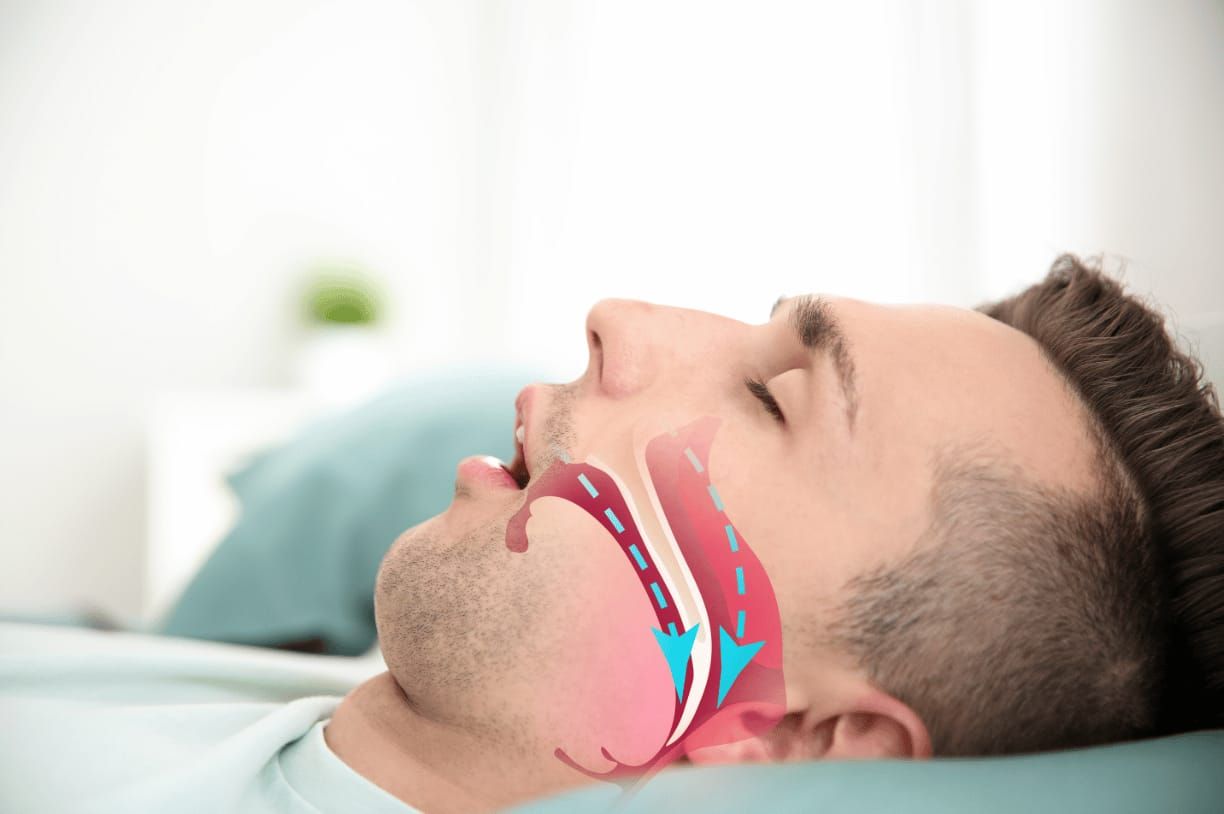
After a diagnosis of obstructive sleep apnea syndrome (OSAS), the first question is almost always the same: CPAP or oral appliance? Both treatments pursue the same goal — keeping the pharynx open during sleep — but they get there in very different ways.
CPAP therapy (Continuous Positive Airway Pressure) uses a small bedside unit that generates mild positive pressure through a tube and a mask. That airflow acts as a pneumatic splint: it holds the upper airway open mechanically for as long as the mask is worn.
A mandibular advancement device (MAD), known in Switzerland by the German term Unterkieferprotrusionsschiene (UKPS), is a custom-made dental device consisting of two connected splints for the upper and lower jaw. At night it holds the lower jaw in a slightly advanced position, drawing the base of the tongue forward and keeping the pharyngeal space clear. In everyday language it is simply called an anti-snoring mouthpiece; medical reports and health insurer paperwork use the term UKPS.
When CPAP is indicated
In sleep medicine CPAP remains the standard of care for severe sleep apnea. Its pressure can be individually adjusted and it works regardless of dental status. It is the first choice above all in these situations:
- severe obstructive sleep apnea
- pronounced daytime sleepiness or falling asleep at the wheel
- relevant concomitant cardiovascular disease
- cases where an oral appliance is not feasible dentally: too few or non-load-bearing teeth, untreated periodontitis, significant temporomandibular joint disorders
When a mandibular advancement device is indicated
A MAD is not a budget version of CPAP. It is a therapy in its own right with its own field of indication. It is considered above all for:
- mild to moderate OSAS
- positional, socially disruptive snoring without relevant apneas
- patients who demonstrably cannot tolerate CPAP or have discontinued it
- frequent travel and nights away from home, since the device needs no power, water or accessories
The precondition is always a dental assessment: enough healthy teeth, a stable periodontium and a symptom-free jaw joint.
Adherence: the honest point
On paper CPAP lowers the apnea-hypopnea index more markedly. That calculation only holds, however, if the device is used every night and throughout the night. A substantial share of patients abandon the mask or wear it only for a few hours. Many patients report, by contrast, that they wear an oral appliance more consistently, because it is silent, does not disturb a partner and does not restrict movement in bed.
The sober conclusion: a therapy that is used helps more than a therapy that stays in the drawer. Tolerability is therefore not a side issue but part of the clinical decision.
Side effects and the adjustment period
Both approaches require patience. Giving up in the first week is premature.
With CPAP, dry mucous membranes, pressure marks from the mask, air leaking at the edges, aerophagia or the noise of the unit are common. Many of these problems can be solved with a different mask shape, a humidifier or a fresh pressure titration.
With a MAD, increased salivation, tension in the chewing muscles and an unfamiliar bite on waking are typical. These usually subside after the first few weeks. Because sustained advancement can change tooth position over time, regular dental check-ups are an integral part of the therapy.
How the decision is reached
The choice is not made by the patient alone, and certainly not by an online shop. In Switzerland the pathway is clearly defined:
- Assessment and diagnosis: pulmonology, ENT or a certified sleep centre performs home polygraphy or polysomnography in a sleep laboratory. The severity of the OSAS follows from this.
- Indication and prescription: the treating physician decides, on the basis of those measurements, whether CPAP, a MAD or a combination makes sense.
- Dental assessment: the dentist examines the teeth, periodontium and jaw joint and takes the impressions.
- Manufacturing: SnoreFreeSwiss is the dental laboratory of ProthesLab3D GmbH in Zurich. We produce the custom-made device from those records — we do not make diagnoses and we do not carry out sleep studies.
- Follow-up: the advancement is adjusted in steps and the treatment result is checked by the physician.
Costs and reimbursement
Under certain conditions, treatment with a mandibular advancement device is covered by the Swiss compulsory basic insurance. This requires a sleep medicine diagnosis and a prescription issued by pulmonology, ENT or a certified sleep centre. The annual franchise and the co-payment always remain at your own expense. Clarify your entitlement with your health insurer before manufacturing begins; our prices are listed on the Pricing page.
Conclusion
CPAP and oral appliance therapy are not competitors: they cover different severity levels and different life situations. In severe sleep apnea CPAP remains the reference; in mild to moderate OSAS and in documented CPAP intolerance, a MAD is a medically recognised alternative. For an overview of every other approach, see our article All devices to solve snoring or sleep apnea.
Once a diagnosis exists and your dentist has taken the impressions, we manufacture your custom-made anti-snoring mouthpiece in Zurich, with Swiss quality.